
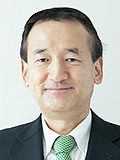
 I have been appointed as the 18th President, succeeding former President Tomoyoshi Yamashita (Kyoto University). Together with Vice President Hiroyuki Kusuhara (University of Tokyo; next President) and the members of the 18th Board of Directors and Auditors, I will dedicate my utmost efforts to the sustainable development of this Society. I sincerely request the continued support of our members and all related parties for the activities of this Society.
The Japanese Society of Pharmacokinetics, established in 1985, is Japan’s sole academic society dedicated to the study of pharmacokinetics. Pharmacokinetics is the science that seeks to understand the manifestation of pharmacologic and toxic effects following drug administration or toxin ingestion. Specifically, it aims to quantitatively understand efficacy, side effects, and toxicity by elucidating the fundamental principles of where and how much drugs or toxins exist within the body.There are individual differences in how drugs work and how toxicity manifests. Pharmacokinetic information—where and how much a drug exists—serves as a quantitative indicator (biomarker) to determine whether a drug is effective or not.
Meanwhile, the environment surrounding pharmacokinetics is undergoing significant change, and our society continues to transform accordingly. For example, pharmacokinetics is increasingly required to deliver better drugs to patients faster.As drug types (modalities) diversify beyond traditional small molecules to include nucleic acids, antibodies, viruses, and cells, there is a growing need to establish a discipline that enables the rapid selection of superior drugs. This requires advancements across various aspects: analysis for pharmacokinetic evaluation, cell culture, drug delivery, prediction, and regulatory compliance.A distinctive feature of this society is that many members are researchers from companies involved in pharmaceutical development, fostering mutual growth and collaboration through annual meetings, short courses, and other activities.
Pharmacokinetics is also essential for administering the appropriate dose to patients for a drug to be effective. Research is thriving not only on the dynamics of drugs themselves but also on understanding the behavior of all substances present in the body, applying them as biomarkers, and using mathematical models to predict disease progression and drug efficacy. Furthermore, pharmacokinetics related to food and health, and preventing disease, is also developing.Pharmacokinetics is a highly interdisciplinary field with strong affinities not only for drugs but also for food, cosmetics, pesticides, and many other areas.
The 2024 Annual Meeting of our Society, under the leadership of President Kiyomi Ito (Musashino University), is scheduled as a joint meeting with the international ISSX conference in Hawaii this September. A similar joint meeting planned under President Hiroshi Yamazaki (Showa Pharmaceutical University) in 2020 was converted to a web-based event due to the COVID-19 pandemic. Now, preparations are underway for an exciting in-person conference.We sincerely hope you will join us. Another distinctive feature of our society is the Directors’ Initiative Session (DIS). DIS primarily plans symposiums for the annual meeting and engages in joint activities with other societies, focusing on activities that look toward the future of our society.As the environment surrounding pharmaceuticals undergoes rapid change, DIS must also gradually evolve. Among its activities, such as co-hosting symposia at the annual meeting, the international collaboration among four Asian countries (South Korea, China, Thailand, and Japan) initiated in the 15th term added India last year. This is expected to further accelerate mutual exchange.The international scientific journal Drug Metabolism and Pharmacokinetics (DMPK), published by our society, has established a solid position as an international journal since its launch in English in 2002. We plan to pursue further internationalization going forward. Additionally, aiming to invigorate society activities and enhance member services, we intend to work on planning various seminars related to pharmacokinetics and improving the qualification system for society members.
This concludes our introduction to the current status and future development of the Japanese Society of Drug Metabolism. We sincerely hope that many individuals from related fields will join our society and enjoy participating in our diverse activities.
Yukio Kato (Kanazawa University)